MUTEK Forum, Montreal · August 22–23, 2026
The chord looper, built on a stock Stomp.
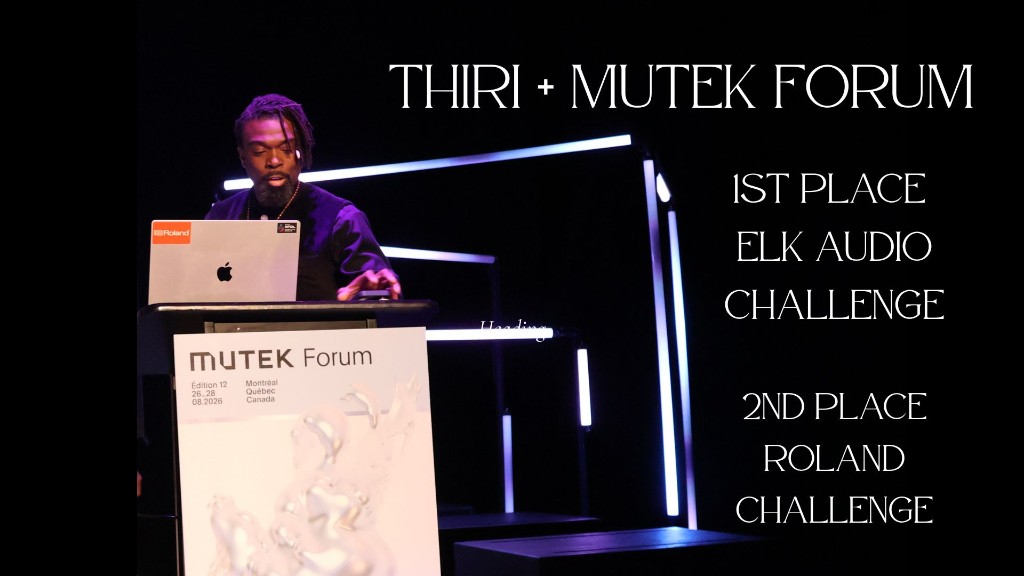
First place at MUTEK. Now blogging the build to completion.
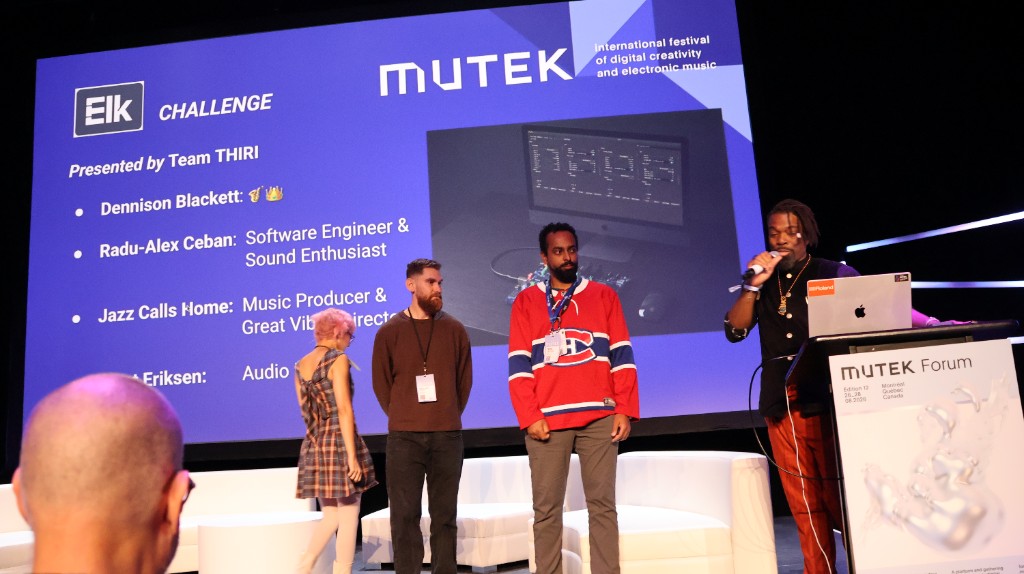
At the Music Hackspace × MUTEK Hackathon (August 22–23, 2026), the Elk Audio Challenge posed a hard question: Can a deterministic harmony engine track melody and voice 5-part harmony inside a 1.333 ms audio callback on low-power embedded hardware?
It can. On a stock, commercially available $399 Elk Stomp box, HORN SXTN ran at 0.592 ms average block latency with zero buffer overruns. It took first place. Team: HRNSXTN x RDMSXN.
The competition is over, but the build is just getting started. We are actively engineering HORN SXTN from a hackathon-winning prototype into a fully realized performance instrument — and blogging every step of the hardware, firmware, and DSP build as we go. This is not a product for sale.

0.592 ms average inside a 1.333 ms deadline
Stock Elk Stomp. STM32MP157 dual Cortex-A7 @ 800 MHz. 48 kHz, 64-sample buffer. Elk Audio OS 1.2.2 + Sushi 1.3.0 hosting a headless JUCE 8 VST3. No overclock. No custom board. No cloud.
| Measurement parameter | Measured result | Production target | Environment details |
|---|---|---|---|
| Mean block time | 0.592 ms | < 1.333 ms | Stock Elk Stomp ($399) · STM32MP157 |
| Worst-case peak block | 0.788 ms | < 1.333 ms (zero xruns) | 48 kHz, 64-sample buffer, performance governor |
| Polyphony | 5 pitch-shifted voices | Real-time tracking | Headless JUCE 8 VST3 hosted in Sushi 1.3.0 |
| Execution context | In-process audio callback | 0 dynamic allocations | Zero network calls, zero heap allocations in callback |
| Hackathon standing | 1st place | Elk Audio Challenge | Music Hackspace × MUTEK Forum, Montreal 2026 |
A looper that loops harmony, not just audio
Monophonic instrumentalists — horns, winds, vocals — have never had a live looper that understands chord progressions. Audio loopers only repeat frozen lines. HORN SXTN tracks intent and renders a moving harmonic bed on-device.
Line or clip-mic audio from a single voice. No MIDI required at this stage — the detector works from the acoustic signal.
Pitch and onset tracking inside the callback budget. Sprint 02 replaces the time-domain tracker with low-latency PSOLA.
Deterministic pitch-class-set engine: chord intent, voice leading, and re-voicing — same answer every call, no network.
Five pitch-shifted voices render the living bed on the Stomp itself. Measured at 0.592 ms average, 0.788 ms peak.
Footswitches steer section, hold, re-roll, and tempo. Hands stay on the horn. The bed moves with the form.
What we are documenting
Follow the sprints here and in Game THIRI. Star the repo if you want the CSV and the profiling harness.
-
[x]
Sprint 01 — The Benchmark
Profiling JUCE 8 VST3 on Sushi 1.3.0, solving NEON vectorization, and proving 5 voices within 0.592 ms. Published in thiri-meets-elk.
-
[ ]
Sprint 02 — Real-Time Pitch Tracking Optimization
Replacing time-domain pitch tracking with low-latency PSOLA to reduce latency.
-
[ ]
Sprint 03 — Physical Control Mapping
Binding Elk Stomp footswitches, rotary encoders, and OLED to THIRI harmonic parameters (Mode, Spread, Tension, Re-voice).
-
[ ]
Sprint 04 — Foot-Operated Form Navigation
Designing the hands-free performance state machine for navigating ii–V–I changes and blues forms.
-
[ ]
Sprint 05 — Enclosure & Thermal Profiling
Stage-hardening the board, continuous 4-hour thermal testing, and live performance demos. Still a lab instrument — not a SKU.
Star the repo. Follow the build.
The Stomp is a measurement and WIP instrument. If you build hardware or want the same numbers on your board, the harness is public.